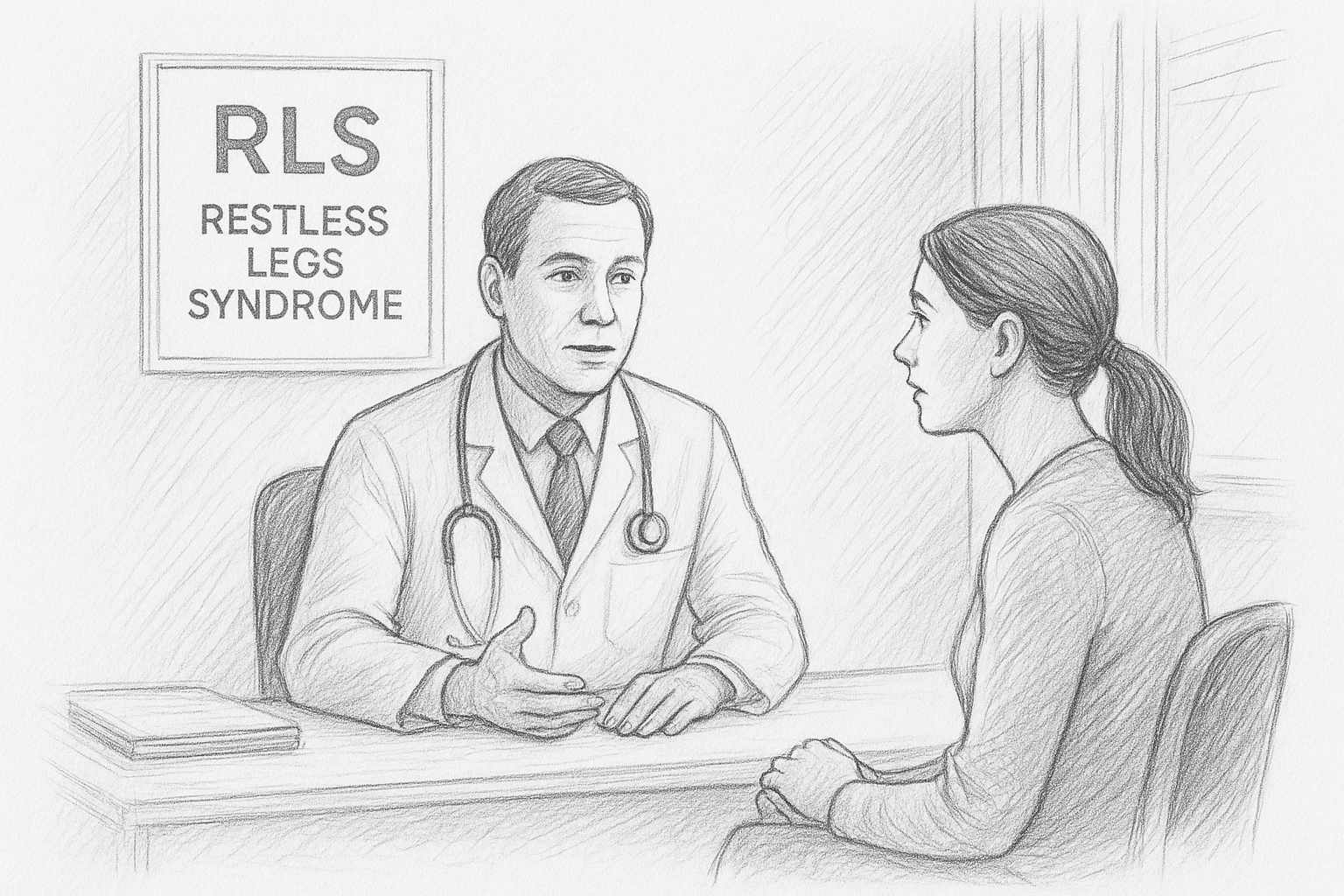
Getting proper diagnosis and treatment for RLS often depends on how effectively you can communicate your symptoms to healthcare providers. This guide will help you prepare for productive conversations that lead to better outcomes.
Talking to your doctor about Restless Legs Syndrome can feel frustrating, especially when you're dealing with a condition that's often misunderstood or dismissed. Many patients struggle to convey the severity of their symptoms or find that their concerns aren't taken seriously due to the condition's unfortunate name.
The key to successful treatment lies in effective communication. By preparing thoroughly and knowing how to describe your symptoms in medical terms, you can help your healthcare provider understand the true impact of RLS on your life and work together toward effective management strategies.
Preparation is crucial for making the most of your limited appointment time. The more organised and specific you can be, the better your doctor will understand your condition.
Keep a detailed symptom diary for at least two weeks before your appointment. This documentation will provide valuable insights into patterns and triggers. Our RLS Diary makes it easy to track your sleep, symptoms, and treatments over time.
Compile relevant information that might help your doctor understand your condition better:
The way you describe your symptoms can significantly impact how seriously your doctor takes your condition. Use precise, medical language when possible.
Familiarise yourself with the International Restless Legs Syndrome Study Group criteria and use this framework when describing your symptoms:
Instead of: "My legs feel restless"
Say: "I experience an overwhelming urge to move my legs that I cannot resist or ignore"
Instead of: "My legs feel weird"
Say: "The urge to move is accompanied by uncomfortable sensations like crawling, creeping, pulling, or burning deep inside my legs"
Instead of: "It happens when I sit down"
Say: "These symptoms begin or worsen during periods of rest, inactivity, or when lying down or sitting"
Instead of: "Walking helps"
Say: "The symptoms are partially or completely relieved by movement such as walking, stretching, or rubbing, at least as long as the activity continues"
Instead of: "It's worse at night"
Say: "Symptoms follow a circadian pattern, being worse in the evening and at night compared to during the day"
Help your doctor understand how RLS affects your daily life by providing specific examples:
Come prepared with specific questions to ensure you get the information and treatment you need:
One of the most important topics to raise during your appointment is your iron status. Even if your blood tests come back “normal,” ferritin levels that are too low can significantly worsen RLS symptoms. This is an area where many patients need to gently educate their doctor — and where up-to-date research can really help.
Many people with Restless Legs Syndrome (RLS) are told their iron levels are “normal,” but what’s considered normal for the general population can still be too low for RLS. Research shows that low brain iron is closely linked to RLS symptoms, even when blood levels look fine on paper.
Current clinical guidelines from the RLS Foundation and the Mayo Clinic’s updated RLS treatment algorithm (2021) recommend maintaining a serum ferritin above 75 µg/L (and ideally closer to 100 µg/L) to support healthy dopamine function. If your ferritin is ≤ 75 µg/L and transferrin saturation is under about 45%, doctors are encouraged to consider iron supplementation — and if oral iron doesn't help, an intravenous (IV) iron infusion may be the next step.
When you speak to your doctor, you could say something like: “My ferritin is 40, which is within the standard normal range but below the target range recommended for RLS. Could we discuss iron supplementation or possibly an iron infusion if oral iron doesn't improve my levels or symptoms?”
It can also help to bring a recent iron panel (ferritin, transferrin saturation, and TIBC) and a record of your symptoms. Our RLS Diary makes it easy to track your sleep, symptoms, and treatments over time — giving you clear data to share with your doctor and strengthening your case for getting the right treatment.
Write down your questions beforehand and bring the list to your appointment. It's easy to forget important questions when you're in the moment, and having them written down ensures you get all the information you need.
Understanding what constitutes appropriate medical care for RLS helps you advocate for yourself and know when to seek a second opinion.
Sometimes you need to be your own advocate to get proper care. Here are strategies for ensuring your voice is heard:
Don't hesitate to ask for a referral to a specialist if:
Your work doesn't end when you leave the doctor's office. Following through properly ensures the best possible outcomes.
Maintain open communication with your healthcare team:
"I went to three different doctors before finding one who took my RLS seriously. The key was bringing detailed symptom documentation and using the medical terminology I learned online. Once I could describe my symptoms in clinical terms, everything changed. My current doctor immediately recognised the condition and started appropriate treatment."
- Jennifer K., successful RLS patient
RLS is typically a chronic condition that requires ongoing management. Building a strong relationship with your healthcare provider is essential for long-term success.
You know your body better than anyone. If something doesn't feel right or a treatment isn't working, speak up. Don't accept dismissive responses to legitimate medical concerns.
Keep learning about RLS and new treatment developments. The more you understand your condition, the better you can participate in treatment decisions.
Finding the right treatment often takes time and may require trying multiple approaches. Don't give up if the first attempt doesn't work perfectly.
Keep records of your symptoms, treatments tried, side effects experienced, and how different approaches affected your quality of life.
Effective communication with your doctor is one of the most important skills you can develop as an RLS patient. By preparing thoroughly, using appropriate medical language, asking the right questions, and advocating for yourself, you significantly improve your chances of receiving proper diagnosis and effective treatment.
Remember that you are the expert on your own experience. While your doctor brings medical knowledge and clinical expertise, you bring invaluable insights about how RLS affects your daily life. The best treatment outcomes happen when both perspectives are valued and integrated into your care plan.
Don't let anyone minimise your symptoms or dismiss your concerns. You deserve to be heard, understood, and treated with the same seriousness as any other neurological condition. With preparation, persistence, and the right healthcare partner, effective RLS management is absolutely achievable.
Start preparing for your next doctor's appointment by creating a symptom diary and writing down your questions. The more prepared you are, the more productive your appointment will be. Your health is worth the investment in proper preparation and advocacy.
Share On:
